
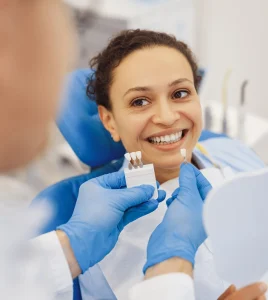
The Fact That Changes Everything: “Cosmetic Dentist” Isn’t a Licensed Specialty
The American Dental Association recognizes a specific list of dental specialties — periodontics, endodontics, orthodontics, oral and maxillofacial surgery, pediatric dentistry, and others — each requiring years of additional training beyond dental school, plus a certifying exam through a recognized board. You can view the full, current list of ADA-recognized specialties directly through the National Commission on Recognition of Dental Specialties and Certifying Boards.
Cosmetic dentistry is not on that list. It never has been. That means, legally, any licensed general dentist can call themselves a “cosmetic dentist” regardless of how much, or how little, additional training they’ve actually pursued in that specific area. There’s no standardized residency, no board exam, and no governing body that verifies the claim before it goes on a website or a business card. It’s not a credential — it’s a description a dentist chooses to use for marketing purposes.
Compare that to a title like “periodontist” or “endodontist.” Those titles are earned through an accredited postgraduate program and protected by licensing boards — a dentist can’t simply decide to call themselves one. “Cosmetic dentist” carries none of that same protection, which is exactly why the term shows up so liberally across nearly every general practice’s website in town.
This isn’t a reason to be suspicious of cosmetic dentistry as a field, or to assume every dentist advertising it is unqualified. Plenty of general dentists have real, substantial cosmetic experience. It’s a reason to understand that the vetting responsibility sits with you as the patient far more than it would for a credentialed specialty. The good news is that once you understand this one fact, the rest of the evaluation process becomes fairly straightforward — you’re simply looking for the same kind of evidence a licensing board would require, just gathering it yourself.
General Dentistry vs. Cosmetic Dentistry: Why the Distinction Matters
General dentistry is built around function and health: cavities, cleanings, gum disease, root canals, extractions, and the ongoing maintenance of a healthy mouth. It’s reactive and preventive by nature — the goal is to keep your teeth and gums in good working order and catch problems early.
Cosmetic dentistry starts from a different question entirely: not “is this healthy?” but “does this look the way you want it to?” That’s a subjective, aesthetic judgment, and it draws on a different set of skills — an eye for facial proportion, tooth shape and shade, symmetry, and how a smile interacts with someone’s lips, gums, and overall facial structure. Two dentists can be equally skilled at general dentistry and have wildly different aesthetic sensibilities, the same way two skilled photographers can have completely different visual styles.
This is why “my dentist is great” isn’t automatically a reason to trust the same dentist with a smile makeover. Great general care and great cosmetic results are related but genuinely separate track records, and it’s worth evaluating them separately.
Why This Matters More for Cosmetic Work Than for a Routine Cleaning
A cleaning or filling done adequately-but-not-exceptionally is rarely something you’ll notice for years, if ever. Cosmetic work is different in two important ways.
First, it’s often visible every time you smile, talk, laugh, or see yourself in a photo — there’s no hiding a result you’re not happy with the way you might overlook a slightly-less-than-perfect filling on a back molar nobody ever sees.
Second, several cosmetic procedures involve permanent changes to your natural tooth structure. Veneers, for example, require removing a thin layer of enamel to make room for the porcelain shell — and enamel doesn’t grow back. If the result doesn’t turn out the way you hoped, “just redoing it” isn’t simple the way repainting a wall would be. You’re either living with the result, or committing to further treatment to fix it.
That combination — high visibility and permanence — is exactly why the choice of provider matters more here than for most other categories of dental work.
What to Actually Look For: Experience With Cosmetic Cases Specifically
Since cosmetic dentistry isn’t a licensed specialty, the closest equivalent signals of real expertise are experience, training, and a visible track record — not a certificate on the wall.
When researching a cosmetic dentist, look for:
- How many years they’ve specifically focused on cosmetic procedures, not just how many years they’ve practiced dentistry overall. A dentist with 20 years of general practice experience but only occasional cosmetic cases is a different proposition than one who has built a meaningful part of their practice around it.
- Whether they regularly perform the exact treatment you’re considering. A dentist who does veneers a handful of times a year is different from one who does them regularly enough that the process is second nature.
- Continuing education specific to cosmetic dentistry. Because there’s no formal specialty pathway, ongoing training — courses, workshops, hands-on certifications in specific techniques — is the closest equivalent signal available, and it’s entirely fair to ask about it directly during a consultation.
- A consistent aesthetic style you actually like. Even among experienced cosmetic dentists, results vary — some lean toward very bright, uniform “Hollywood” smiles, while others aim for more natural-looking variation. Neither is wrong, but you want a dentist whose typical results match what you’re picturing for yourself.
Dr. Warner has practiced in Mount Pleasant for over 27 years, with a significant focus on cosmetic and restorative cases — the kind of sustained, local track record that matters most when the result is something you’ll see in the mirror every day, not just something you’re taking on faith from a new provider. You can learn more about his background on our Meet the Doctor page.
Ask to See Real Before-and-After Results
Stock photos and generic marketing images don’t tell you much about what a specific dentist can actually do — they tell you what a photographer or stock library produced. Ask any cosmetic dentist you’re considering for real before-and-after photos of their own patients, ideally cases similar to what you’re hoping to achieve, not just their single best result ever produced across their entire career.
Pay attention to consistency across multiple examples, not just one standout case. A single spectacular result could be an outlier; a gallery full of consistently strong, natural-looking outcomes tells you much more about what to expect from your own treatment.
This is one of the clearest, most concrete ways to judge whether a dentist’s aesthetic style matches what you’re picturing for your own smile. You can browse real patient results in our Before & After Gallery as an example of the kind of transparency you should expect from any provider you’re considering.
Common Cosmetic Concerns and What Actually Fixes Them
Part of evaluating a cosmetic dentist is understanding, at least at a basic level, what treatment actually matches your concern — so you can tell whether their recommendation makes sense or seems like an upsell.
Discoloration or staining that doesn’t respond to whitening. Some staining sits on the surface of the tooth and responds well to whitening. Deeper, internal discoloration — often from certain medications taken during childhood, or from a tooth that’s had a root canal — usually doesn’t respond to whitening at all, and needs veneers or bonding to mask instead.
Gaps between teeth. Small gaps are often treatable with bonding or veneers. Larger gaps, or multiple gaps throughout the mouth, may be better addressed with orthodontics first, with cosmetic work reserved for finishing touches afterward.
Chipped or worn edges. A single chip is often a same-visit bonding fix. Widespread wear across many teeth (sometimes from years of grinding) is a bigger conversation that may need a night guard addressed first, so the cosmetic work isn’t undone by the same habit that caused the wear.
Misshapen or slightly crooked teeth. Veneers can visually correct minor shape irregularities and slight rotation without orthodontics, but they aren’t a substitute for braces or clear aligners when the misalignment is more significant.
A “gummy” smile. This is a case where cosmetic dentistry alone may not be the right category of treatment at all — depending on the cause, a periodontist may be the more appropriate provider, which is exactly the kind of nuance a good general or cosmetic dentist should recognize and refer out for rather than trying to solve everything in-house.
A cosmetic dentist worth choosing should be able to explain, in plain terms, why they’re recommending one treatment over another for your specific concern — not simply present veneers as the default answer to everything.
Understand Your Actual Options Before You Commit
A good cosmetic dentist won’t push you toward the most expensive option by default. They should walk you through the realistic choices for your specific concern, since different issues call for genuinely different treatments:
- Minor chips, small gaps, or slight discoloration are often well-suited to dental bonding — a same-visit, more affordable option that doesn’t require permanent removal of enamel.
- More significant discoloration, uneven shape, or a broader smile makeover may call for porcelain veneers, which last longer than bonding but involve a permanent commitment.
- Simple surface staining without structural concerns might only need professional teeth whitening, which is far less invasive and less expensive than either of the above.
Our cosmetic dentistry page covers the full range of options in more depth if you’re still narrowing down which category fits your situation.
If a dentist recommends the same treatment for everyone regardless of what they’re dealing with, or moves straight to veneers for a concern that bonding or whitening could reasonably address, that’s worth noticing. The right recommendation depends on your teeth, your goals, and your budget — not a one-size-fits-all default that happens to be the highest-margin option in the practice.
Consider the Technology and Materials Used
Ask what specific materials are used for veneers or crowns. Porcelain quality and type vary meaningfully between labs and providers, and the difference shows up in how natural the result looks and how long it lasts. Ask, too, whether digital scanning is available in place of traditional physical molds — digital scanning is generally more comfortable for the patient, avoids the messy impression material older methods rely on, and tends to produce more precise results because there’s less room for distortion between the scan and the final restoration.
Some practices also use digital smile design software, which lets you preview a simulated version of your result before any treatment begins. This isn’t strictly necessary for a good outcome, but it’s a useful sign that a provider is investing in tools that improve predictability and communication with patients.
These details affect both how pleasant your treatment experience is and how durable and natural-looking the final result will be, so it’s a fair question to ask directly rather than assuming every provider uses the same materials and methods.
Read Reviews — But Read Them Closely
Star ratings are a reasonable starting point, but the actual content of reviews tells you far more than the number itself. Look for specific mentions of:
- Comfort and communication during the procedure itself, not just friendliness at the front desk
- How clearly the dentist explained options and pricing upfront, before treatment began, rather than after the fact
- Satisfaction with the final cosmetic result specifically, described in enough detail that you can tell the reviewer is talking about real outcomes, not just a pleasant appointment
A practice with hundreds of detailed, specific reviews tends to be a stronger signal of consistent results than a handful of short, generic ones that could describe almost any dental visit. You can read real patient experiences on our Testimonials page.
The ADA’s own guide to finding a dentist echoes a lot of this same advice at a general level — worth a look if you want a second, independent source on what a thorough search process should involve, beyond what’s specific to cosmetic work.
Understanding the Cost Conversation
Cosmetic procedures vary enormously in price depending on the number of teeth involved, the specific material chosen, and the complexity of your case, which means any single number you find online should be treated as a rough starting point at best.
Dental insurance typically does not cover procedures considered purely cosmetic, since coverage is generally built around treating disease or restoring function rather than appearance. There are exceptions — for instance, bonding used to repair a chip from an injury may be treated differently than bonding done purely to reshape an otherwise healthy tooth — but these distinctions are worth confirming directly with your provider and insurance rather than assuming either way.
A trustworthy cosmetic dentist should give you a clear, itemized cost breakdown before treatment begins, discuss any financing options available, and be upfront about what is and isn’t included in that quote — lab fees, follow-up adjustments, and any additional visits, for example. If a provider is vague about cost until you’ve already committed to moving forward, treat that as a meaningful red flag rather than a minor inconvenience.
What a Good Consultation Should Actually Look Like
A thorough cosmetic consultation should include a real, unhurried conversation about your goals, an honest assessment of what’s realistically achievable given your current teeth, and a clear breakdown of cost, timeline, and what happens at each visit — not just a quick look in your mouth followed by a treatment plan and a price.
Expect your dentist to ask what you actually want to change, not just look at your teeth and tell you what they think needs fixing. A good consultation is a conversation, not a diagnosis handed down without your input. It should also include a realistic discussion of limitations — if your goals aren’t fully achievable with cosmetic dentistry alone, a trustworthy provider will tell you that directly rather than promising a result they can’t deliver.
If a consultation feels rushed, if pricing stays vague until you’re already committed, or if the conversation skips straight past your actual goals to a recommended procedure, that’s a meaningful signal, not a minor inconvenience.
Red Flags Worth Taking Seriously
- A single default recommendation regardless of your specific concern. As covered above, different issues call for different treatments — a provider who doesn’t differentiate is a warning sign that they may be recommending what’s most profitable rather than what’s most appropriate.
- No willingness to show real before-and-after examples, or only showing a small number of cherry-picked “perfect” cases rather than a representative range of their actual work.
- Pressure to decide same-day, especially for a permanent procedure like veneers. A confident, experienced provider doesn’t need to rush your decision.
- Vague answers about cost that only become specific after you’ve already committed to moving forward, or unexplained fees that appear later in the process.
- No discussion of maintenance or longevity — a good provider tells you upfront how long a result is expected to last and what it takes to maintain it, not just how good it will look on day one.
- Dismissiveness toward your questions. If asking about experience, materials, or alternatives is met with impatience rather than a straightforward answer, that’s worth paying attention to.
Questions Worth Asking at Your Consultation
- How many similar cases have you completed, and how recently?
- Can I see before-and-after photos of patients with a concern similar to mine?
- What are all of my realistic options, not just the one you’re recommending first?
- What’s the expected timeline and number of visits from start to finish?
- What’s included in the quoted cost, and what isn’t?
- What does long-term maintenance look like for this treatment?
- What happens if I’m not satisfied with the result?
What Happens After Treatment: Caring for Your New Smile
Cosmetic results aren’t entirely maintenance-free, and a good dentist should walk you through what’s involved before you commit, not just afterward. Bonding and veneers can still stain around the edges over time, particularly with dark beverages like coffee, tea, and red wine, so many patients adjust habits slightly or use a straw for these drinks to help results last as long as possible.
If you grind your teeth at night, a custom night guard is often recommended after cosmetic work specifically to protect your investment — grinding can chip bonding or crack veneers over time in a way that healthy natural enamel might tolerate better. Regular checkups also allow your dentist to catch any small issues, like a lifting edge on a bonded tooth, before they become bigger problems.
Sedation and Comfort Options for Anxious Patients
Cosmetic consultations and procedures can bring up real anxiety for some patients, especially when the conversation involves permanent changes to your teeth. A good practice should be able to discuss comfort options directly — including nitrous oxide or oral sedation for patients who feel nervous about longer appointments — rather than treating anxiety as something you should simply push through. If dental anxiety has kept you from pursuing cosmetic work in the past, it’s worth raising directly during your consultation rather than assuming it isn’t an option.
Why Local, Long-Term Experience Matters
Beyond credentials and technology, there’s real value in choosing a cosmetic dentist who has an established, local track record — someone whose work you can verify through neighbors, coworkers, and long-standing patients, not just an online portfolio. A dentist who has practiced in the same community for decades has a reputation that’s been tested over time, in a way a newer or out-of-town provider’s simply hasn’t. It also tends to mean easier follow-up care, since you’re not relying on a provider who might not be practicing in the area in a few years if something needs adjusting down the road.
Frequently Asked Questions
Is cosmetic dentistry covered by insurance? Generally no, since most dental insurance is built around treating disease or restoring function rather than appearance. Some exceptions exist depending on the cause of the issue being treated — worth confirming directly with your provider and insurer.
How do I know if I need veneers, bonding, or just whitening? It depends on the specific issue. Surface staining alone is usually a whitening case. Chips, small gaps, or minor reshaping are often bonding. More significant discoloration or a broader smile makeover typically points toward veneers. A consultation is the most reliable way to know which category fits your specific teeth.
Can cosmetic work be redone if I don’t like the result? It depends on the treatment. Whitening and bonding can generally be adjusted or redone. Veneers involve permanent enamel removal, so revisions are possible but more involved — which is exactly why choosing the right provider matters so much upfront.
Is there an age limit for cosmetic dentistry? Most cosmetic treatments are appropriate for adults of any age, as long as your teeth and gums are otherwise healthy. Some providers recommend waiting until orthodontic treatment, if needed, is complete first.
What if I have dental anxiety about cosmetic procedures? This is common and worth discussing openly at your consultation. Many practices offer sedation options specifically to make longer cosmetic appointments more comfortable for anxious patients.
Ready to Talk Through Your Options?
Choosing a cosmetic dentist is a personal decision, and the right one for you is the one who takes time to understand what you actually want — not just what procedure they’d like to recommend. If you’re ready to discuss your options, our cosmetic dentistry page covers the full range of services we offer, or you can schedule a consultation directly with Dr. Warner to get a straightforward, honest read on what would actually work best for your smile.