

Root Canal Treatment That Relieves Pain and Saves Your Tooth
Tooth pain that has moved from a minor ache to something that keeps you up at night is your body telling you something is wrong. An infection inside the tooth does not resolve on its own, and waiting only allows it to spread. Root canal treatment stops that process, relieves the pain, and in most cases saves the natural tooth entirely. At East Cooper Dental, we provide root canal treatment for West Ashley patients in a calm, well-equipped environment, and we make sure you understand exactly what is happening at every step.
Dr. Warner has been performing root canal treatment in Mount Pleasant since 2002. West Ashley patients make the drive because when a tooth is infected, they want someone they can trust to get it right.
Why West Ashley Patients Choose East Cooper Dental for Root Canal Treatment
Root canal treatment has an outdated reputation for being painful. The procedure itself is what relieves the pain. The infection was causing the discomfort all along. At East Cooper Dental, we use modern anesthesia protocols and instrumentation that make the experience significantly more comfortable than most patients would expect.
Our approach is straightforward: explain what is happening before we start, work precisely while you are numb and comfortable, and follow up afterward. You will not leave with unanswered questions about the procedure or what comes next.
West Ashley patients can also find the same standard of care reflected in our root canal treatment page for Charleston patients and our root canal page for Mount Pleasant patients. Wherever you are coming from in the Charleston metro, experienced endodontic care is accessible through our practice.

What Is a Root Canal?
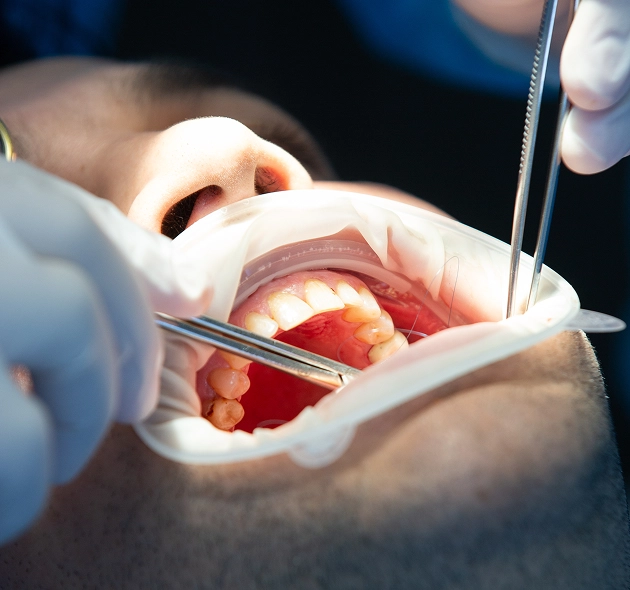
A root canal is an endodontic procedure that removes infected or inflamed pulp tissue from inside the tooth, cleans and disinfects the internal canal system, and seals the tooth to prevent reinfection. The term “root canal” refers to the natural cavities inside the root of the tooth that house the pulp.
The pulp contains nerves, blood vessels, and connective tissue. When bacteria penetrate the outer layers of the tooth through a deep cavity, a crack, or a chip, they reach the pulp and cause infection. Without treatment, the infection spreads into the surrounding bone and can eventually lead to tooth loss and systemic health concerns.
The goal of root canal treatment is to eliminate the infection while preserving as much of the natural tooth structure as possible. Once the procedure is complete and the tooth is restored with a crown, it can function normally for many years.
According to the American Association of Endodontists (AAE), root canal treatment has a high success rate and is the best option available for saving a tooth with an infected pulp. Extraction is not a better choice in most cases. It eliminates the pain but creates a new set of problems related to the missing tooth.
Signs You May Need a Root Canal
These symptoms are common indicators that the pulp inside a tooth is infected or severely inflamed:
- Persistent, intense toothache, especially pain that worsens when you bite down or apply pressure
- Prolonged sensitivity to heat or cold. Sensitivity that lingers after the temperature source is removed is a warning sign
- Swelling in the gum or jaw. A pimple-like bump on the gum near a tooth (called a dental abscess) is a clear sign of infection
- Darkening of the tooth. A tooth that has shifted to a gray or dark yellow shade may have a dying or dead pulp
- Pain that radiates to the jaw, ear, or side of the face
- A tooth that feels slightly loose. The soft tissue around an infected tooth can soften, creating a sense of movement
Not all of these symptoms appear in every case, and some patients with infected pulp experience no pain at all until the infection is well advanced. If you are experiencing any combination of the above, or if you have a tooth that does not feel right, contact us to schedule an evaluation. For severe or sudden dental pain, our emergency dental team in West Ashley is available to see you promptly.


Are You a Candidate for Root Canal Treatment?
Root canal treatment is appropriate for any patient with an infected, inflamed, or necrotic tooth pulp where sufficient natural tooth structure remains to support a restoration afterward. The key considerations:
Extent of infection. Most infections, even advanced ones, can be treated successfully with root canal therapy. Severe infections that have spread extensively into the surrounding bone may require additional procedures, but root canal is almost always the starting point.
Remaining tooth structure. After the procedure, the tooth typically needs a crown to restore its strength. If too little natural tooth structure remains to support a crown, extraction may be the more appropriate path. We evaluate this honestly during your consultation.
Overall health. Certain medical conditions and medications can affect healing. We review your health history before treatment and coordinate with your physician if needed.
Alternative: extraction. Extraction eliminates the infection but creates a gap that should be addressed with a dental implant or bridge to prevent bone loss and shifting of adjacent teeth. Root canal treatment almost always preserves more long-term value than extraction when the tooth can be saved.
The Root Canal Process at
East Cooper Dental

Step 1: Evaluation and Imaging
We take digital X-rays and perform a clinical exam to confirm the diagnosis and assess the extent of the infection. This allows us to plan the procedure accurately and identify any anatomical considerations in the root canal system.

Step 2: Anesthesia
Local anesthesia is administered to fully numb the tooth and surrounding tissue before any work begins. Most patients are surprised by how comfortable the procedure is once the area is numb. Sedation options are available for patients with dental anxiety.

Step 3: Access and Pulp Removal
A small opening is made through the top of the tooth to access the pulp chamber. The infected pulp tissue is carefully removed using specialized endodontic instruments.

Step 4: Cleaning and Shaping
The canal system is cleaned, shaped, and disinfected to remove all infected tissue and bacteria. Antimicrobial irrigating solutions flush the canals during this process.

Step 5: Sealing
The cleaned canals are filled with a biocompatible material called gutta-percha and sealed to prevent reinfection. A temporary or permanent filling is placed in the access opening.

Step 6: Crown Placement
In most cases, a tooth that has undergone root canal treatment needs a crown to restore its full function and prevent fracture. We coordinate this restoration as part of the complete treatment plan.
What to Expect After Root Canal Treatment
Mild soreness or sensitivity in the treated area for a few days after the procedure is normal and expected. Over-the-counter pain relievers manage this effectively for most patients. You can typically return to work and normal activities the following day.
Avoid chewing on the treated side until the permanent crown is in place, as the tooth may be more vulnerable to fracture before restoration is complete.
The infection relief is usually immediate. Most patients notice that the deep, persistent ache is gone as soon as the anesthesia wears off, replaced by a manageable post-procedure soreness that resolves within a few days.
Serving West Ashley and the Greater Charleston Area
East Cooper Dental is located in Mount Pleasant and serves patients from West Ashley, North Charleston, Daniel Island, Sullivan’s Island, Isle of Palms, and the greater Charleston metro. West Ashley patients dealing with tooth pain do not need to wait for a local appointment when experienced endodontic care is accessible at our practice.
We also provide periodontal care for West Ashley patients as part of a comprehensive approach to oral health. Gum disease can complicate root canal outcomes, and addressing both in the same practice simplifies your care.
Ready to Stop the Pain and Save Your Tooth?
If you are experiencing tooth pain, sensitivity, or swelling, the right move is to get it evaluated before it progresses further. Root canal treatment is far less uncomfortable than the infection it resolves, and saving the natural tooth is almost always the better long-term outcome.
If you are in acute pain, let us know when you call and we will do our best to see you the same day.